Coloradoan: Local News
- 2.5
- Rating
- 10.00K
- Installs
- Free
- Price

 Analysis by App-foxy
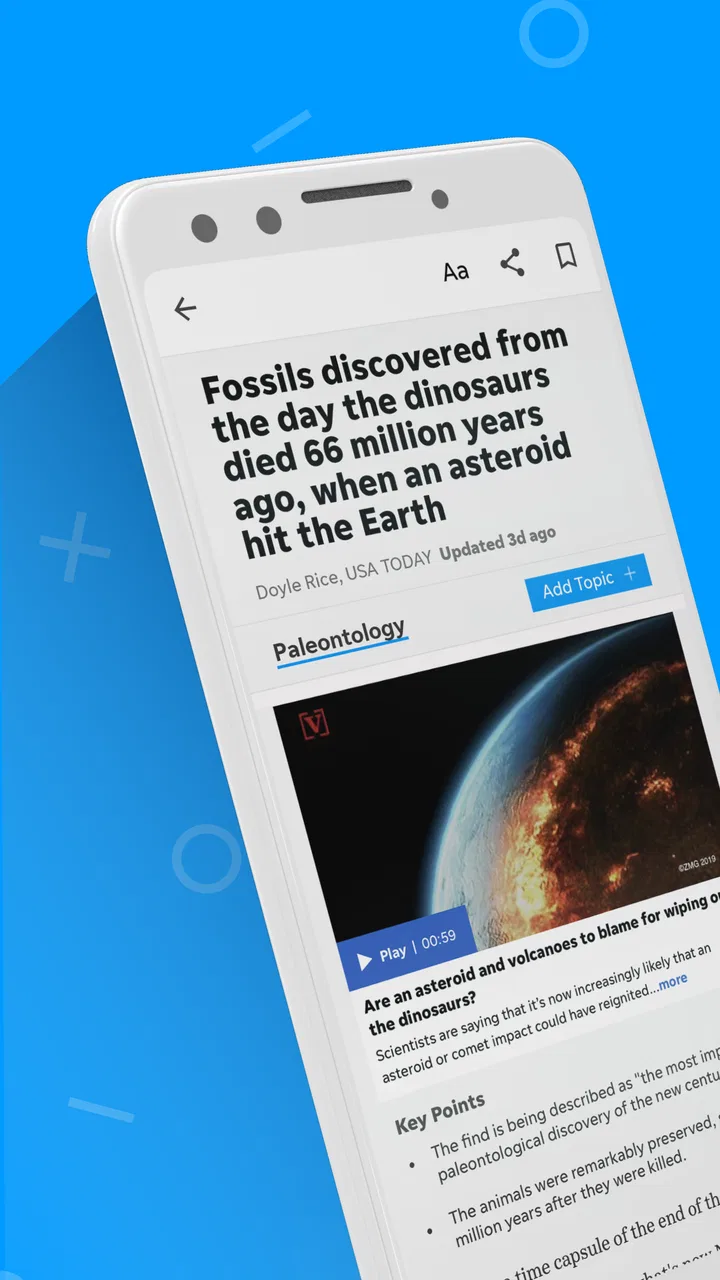
Coloradoan: Local News is a focused news app from USA TODAY Co. built around coverage for Colorado readers. I approached it as the kind of app you might open during breakfast, on a commute, or when a local story starts spreading through your community. Its purpose is straightforward: bring local reporting closer to the front of your daily news routine while also connecting it with broader national coverage, photography, and video.
That focus is both its strongest reason to install it and the main reason some readers may lose interest. If Colorado news is genuinely relevant to your work, family, travel, or neighborhood, the app has a clear place on your phone. If you mainly want a broad national news reader, a general USA TODAY app or another established news service may feel more complete. My experience is best described as useful but specialized, with a few practical compromises that matter more during busy news cycles than during casual reading.
What the app feels like in everyday use
The first thing I noticed is that this is not trying to be an all-purpose information dashboard. The Coloradoan identity gives the experience a local center of gravity. Instead of treating local news as one small section among many, it makes regional relevance the reason to return. That makes it easier to decide whether the app belongs in your routine: you are not installing it for endless variety, but for a closer connection to stories that affect Colorado communities.
You May Also Like

 AccuWeather: Weather Radar
AccuWeather Review: A Quick, Clear Forecast for Everyday Decisions
For everyday plans, the best forecast is the one you can understand quickly. AccuWeather makes rain timing, radar, and local conditions easy to act on, with a few trade-offs.

 Hill Climb Racing
Why Hill Climb Racing Still Turns Crashes Into One More Run
A tiny car, a bumpy hill and one more upgrade: Hill Climb Racing keeps resurfacing because its simple chaos makes every near-miss feel personal.

 AliExpress - Shopping App
AliExpress Makes Global Shopping Feel Personal, but Shoppers Bear the Risk
AliExpress turns a global marketplace into a pocket-sized discovery engine. Its reach is useful, its shopping loop compelling, and its trade-offs easy to miss.

 Lords Mobile: Kingdom Wars
Lords Mobile Is a Kingdom-Building Routine, Not a Quick Match
A case-by-case verdict on the building, battles, device demands, and social commitments that make Lords Mobile rewarding for some players and exhausting for others.

 PDF Scanner app - TapScanner
TapScanner Makes Paperwork Easier to Capture, Check, and Share
TapScanner makes scanning with a phone feel less like a rescue operation and more like a dependable step in getting work done. Its capture tools are useful, though not flawless.

 Block Blast!
 Shows How Much a Puzzle Game Can Leave Out
A quiet grid game shows why puzzle players increasingly value instant clarity, repeatable skill and low-pressure play—and where the genre still needs to catch up.
More From Our News Desk
View All News


In a normal morning scenario, I would use it after checking the weather or messages, scanning the leading local headlines before leaving home. That workflow makes sense for school closures, public safety developments, local government decisions, community events, and stories that may not receive much attention in national publications. The value is not simply having another place to read news; it is reducing the distance between a story and the place where I live or spend time.
The app is free to install, which makes trying it relatively easy. It is intended for readers aged 10 and over, so its audience is broader than a specialist business or politics product. The current version is 8.10.3, and it supports devices running Android 8.0 or later. Those details are important for anyone using an older phone, particularly if the device is already close to its software limits.
Its average rating is 2.5 from roughly 211 ratings, a result that deserves attention rather than dismissal. Ratings can reflect many things beyond the quality of the journalism, including login friction, notifications, subscriptions, crashes, or expectations about how much content should be available without payment. Still, the number suggests that the app experience has not satisfied every reader. I would treat it as a reason to test the app personally instead of assuming the polished description tells the whole story.
Local relevance is the real advantage
The most convincing use case is someone who wants local reporting to sit beside national context. A national news app can tell me that an issue is important, but a Colorado-focused product is more likely to make the local consequences feel immediate. That distinction matters when I am trying to understand what a policy change, regional event, or community dispute means in practical terms.
I also find local news more useful when I read it consistently rather than only during a crisis. A quick daily check can build familiarity with recurring places, public institutions, and local debates. That background makes later articles easier to understand. In this sense, the app works best as a habit, not merely as an emergency source opened when a headline appears in a social feed.
There is a trade-off, though. A focused local app may not provide the breadth that readers expect from a large national news platform. The store summary highlights local and national news, photography, and video, so the experience is not limited to one narrow type of article. Even so, I would not choose it as my only source if I wanted deep international reporting, a wide selection of specialist sections, or a single place for every topic I follow.
How quickly it fits into a news routine
For a news app, perceived speed is not only about how fast a screen appears. It is also about how quickly I can identify what matters, open a story, and return to the list without losing my place. Coloradoan: Local News benefits from having a clear editorial purpose: when I open it for Colorado coverage, I already know what kind of information I am looking for. That can make the experience feel more efficient than browsing a much larger app filled with unrelated headlines.
At the same time, content-heavy screens naturally involve more than text. The inclusion of rich photography and video means that the app may feel more demanding than a simple text feed, especially when I am on a slower connection or using an older device. I would not judge the app solely by the first few seconds after launch. The more revealing test is whether it remains comfortable when moving between several articles, returning to the main feed, and opening media as part of regular reading.
My practical advice is to use it first during a calm period rather than waiting for a major breaking story. That gives you a chance to learn where the local headlines sit, how the reading flow feels, and whether the media presentation suits your connection. If it feels responsive in ordinary use, it is more likely to become a dependable morning tool. If it already feels cumbersome before you need it urgently, a browser shortcut or a lighter news alternative may be better.
What happens during heavier reading sessions
Heavy use for this kind of app does not necessarily mean leaving it open all day. It can mean opening several articles in succession, moving between local and national coverage, viewing photographs, and watching video while notifications or other apps are active. Those are the moments when a news reader reveals whether its design is practical or merely attractive at first glance.
Photography can improve the sense of place in local reporting. A familiar street, public building, landscape, or event often communicates context faster than a paragraph. Video can do the same for interviews and developing stories. The downside is that visual content can consume more attention and connection capacity than a plain article. I would use video selectively when I am on mobile data, especially if my goal is simply to scan headlines.
A useful workflow is to separate quick scanning from deeper reading. I would first review the feed and open only the stories that affect my immediate plans. Later, when I have more time or a stronger connection, I would return for the visual material. This approach keeps the app from becoming a resource-heavy replacement for a simple headline check, while still letting its richer presentation add value when the story deserves it.
Another realistic heavy-use moment is a breaking local event. During those periods, many readers will refresh repeatedly, share stories, and move between updates. That is also when expectations rise sharply. A reader may want the latest information immediately and may become frustrated by interruptions, repeated prompts, or slow media loading. I would keep a second trusted source available for urgent confirmation, not because this app lacks value, but because no single news product should be treated as the only channel during a fast-moving situation.
Reliability and recovery after interruptions
Reliability is more than avoiding a visible crash. For me, a reliable news app should let me resume an article after a phone call, switch briefly to a message, and return without having to reconstruct what I was reading. It should also make it easy to recover after a weak connection or an interrupted video. These are small details, but they determine whether an app becomes part of daily life.
Coloradoan: Local News has a particularly important recovery test because local news is often consumed in short gaps: while waiting for an appointment, standing in line, or taking a brief break. If I have only a few minutes, losing my place or waiting through an awkward reload can erase the benefit of opening the app in the first place. I would judge it over several short sessions rather than one long sitting.
The app’s modest install base, listed as over 10 thousand installs, also gives me a reason to keep expectations measured. That does not prove poor reliability, and it does not say anything definitive about the quality of its reporting. It simply means this is a more specialized product than the biggest mass-market news applications. A smaller audience can be perfectly adequate for a regional reader, but it may also mean fewer people are encountering and reporting the same edge cases.
Recovery is especially relevant on older Android hardware. If the app is closed in the background to free memory, reopening it may feel different from returning to an app that remained active. I would not assume that a single interrupted session represents the whole experience. Instead, I would check whether the app gets back to useful local headlines quickly after being left idle, switching networks, or returning from another task.
Device age, storage, and connection choices
The Android requirement of 8.0 or later makes the app accessible to many users, but compatibility alone does not guarantee a smooth experience on every supported phone. A device that technically meets the minimum may still have limited memory, an older processor, or little free storage. News apps with photography and video can expose those limitations sooner than a basic text reader.
If your phone is older, I would keep the reading habit simple at first: open the app, scan local headlines, read a few articles, and test one piece of visual content. Pay attention to whether switching away and returning feels natural. If the app repeatedly reloads or the phone becomes noticeably busy, the issue may be the combination of the device and media-rich content rather than local news itself.
Connection quality also changes the experience. On reliable Wi-Fi, photographs and video are more likely to feel like useful additions. On a weak mobile signal, I would prioritize text and avoid treating the app as a continuous video feed. This is one of the clearest trade-offs: the richer presentation can make local stories more engaging, but it can also make the app less ideal for readers who need the lightest possible news experience.
Storage-conscious users should also think about their reading pattern. I would not install it alongside several other large media-heavy apps without checking available space first. The app itself may be manageable, but the broader point is that a phone with very little free capacity tends to make every content app feel less dependable. Keeping the device in reasonable shape is part of getting a fair impression of performance.
Free access, paid boundaries, and who should install it
The app costs nothing to download, but in-app purchases range from $14.99 to $69.99 per item. That tells me readers should be prepared for a distinction between installing the app and receiving the complete experience. Before committing to any purchase, I would read the offer shown inside the app carefully and decide whether the amount of local coverage I expect justifies it.
This is particularly important for occasional readers. If I only want a quick look at major Colorado headlines now and then, paying for a broader access option may not make sense. A frequent local-news reader, however, may find more value in having a dedicated source than in relying on scattered social posts or search results. The right choice depends on how often local reporting affects your decisions, not on the low barrier to downloading the app.
I would recommend trying it to Colorado residents, people with family in the state, commuters who need regional awareness, and readers who prefer local context over a purely national news diet. It may also suit someone who enjoys photographs and video as part of news coverage rather than wanting every article reduced to a short text summary.
I would skip it if your priority is a single, broad, international news hub, if you dislike media-rich news feeds, or if you want a completely free experience with no possibility of paid boundaries. I would also hesitate to make it my only news source for urgent events. A general news app, a browser-based local outlet, or a lightweight text-focused reader could be a better match in those situations.
How it compares with familiar alternatives
Compared with a general national news app, Coloradoan: Local News feels more purposeful. A national service usually wins on breadth, topic variety, and the ability to follow many regions from one screen. This app wins when the question is, “What is happening close to me?” That difference is more meaningful than a simple feature checklist because it changes what I notice first.
Compared with reading local news in a mobile browser, a dedicated app can feel more convenient for repeat visits. I do not have to begin with a search every time, and the local identity is already built into the experience. The browser remains attractive for readers who want minimal storage use, easy switching between sources, or fewer app-specific interruptions. If you only visit local coverage once a week, a browser shortcut may be enough.
Compared with social media, the app offers a more deliberate reading environment. Social feeds are useful for discovering that something happened, but they mix reporting with commentary, reposts, and unrelated material. A local news app is better suited to following a story in context. Social platforms may still be faster for community reactions, while this app is more useful when I want an organized place to read rather than a stream of speculation.
The most sensible setup for many people is not choosing only one tool. I would use this app for regular Colorado coverage, a broader service for national and international news, and a direct emergency channel for urgent alerts. That combination avoids asking a regional app to do everything while preserving its strongest advantage: local relevance.
My performance verdict after weighing the trade-offs
Coloradoan: Local News makes the most sense when local information is a recurring need rather than a passing curiosity. Its focused identity helps the app feel purposeful, and the combination of regional reporting with national material, photography, and video gives it more depth than a bare headline list. The free download lowers the risk of trying it, while the paid options mean I would make a deliberate decision before spending money.
My main reservations are the middling average rating, the possibility of heavier demands from visual content, and the uncertainty that naturally comes with a smaller regional product. Those concerns do not cancel its usefulness, but they do make a trial period important. I would install it, test it on my usual network and device, and see whether it recovers comfortably after interruptions before relying on it every day.
My bottom line: choose this app for Colorado-first awareness, not as a universal replacement for every news source. It is a reasonable fit for readers who want local stories within an accessible mobile routine, especially those who value visual reporting. It is less convincing for people seeking the lightest possible app, the broadest global coverage, or a guarantee that every part of the experience will remain friction-free during major breaking news.
FAQs for Coloradoan: Local News
01What is Coloradoan: Local News?
Coloradoan: Local News is a mobile news app focused on delivering coverage from Fort Collins, Northern Colorado, and surrounding communities. It typically includes local breaking news, politics, education, crime, weather, sports, entertainment, opinion pieces, and community updates. The app is designed for readers who want regional reporting in one convenient place rather than relying only on national news sources.
02Is Coloradoan: Local News free to download and use?
The app can generally be downloaded at no cost, but access to all articles and premium content may depend on the publication’s subscription model. Some stories may be available for free, while frequent reading, exclusive reporting, or the full digital edition could require a subscription or account. Before downloading, users should check the current pricing, trial terms, and in-app purchase details listed in the relevant app store.
03What kind of news and features are available in the app?
The application focuses on local information, including community news, local government, schools, public safety, business, sports, weather, and events in the Coloradoan coverage area. Depending on the current version, it may also offer breaking-news alerts, personalized sections, saved stories, sharing tools, photo galleries, videos, and access to a digital newspaper edition. Available features can vary between Android and iOS.
04Does Coloradoan: Local News require an internet connection?
An internet connection is normally required to download the latest articles, images, videos, and breaking-news updates. The app may continue displaying content that has already been loaded, but offline functionality can be limited and older stories may not remain available indefinitely. For the best experience, use Wi-Fi or a reliable mobile data connection, especially when viewing multimedia content or receiving frequent notifications.
05Can I control notifications and personalize the news I receive?
Users can usually manage breaking-news and other alert preferences through the app’s settings or their device notification settings. Depending on the version, you may be able to select topics, local areas, or notification categories that interest you. It is worth reviewing these controls after installation, because alerts can become frequent during major events. Account, privacy, and personalization options may differ by platform and subscription status.
Pros
- Focused coverage of Colorado communities
- politics
- and local events.
- Helps readers stay informed about nearby issues and developments.
- Useful for discovering regional stories beyond national headlines.
- Simple way to access local reporting while away from a computer.
- Content may be relevant to residents
- commuters
- and Colorado visitors.
Cons
- Coverage may be less useful for readers outside Colorado.
- Some stories may require a subscription or account to access fully.
- Local news availability can vary by city or region.
- Frequent notifications may feel excessive unless carefully configured.
- App usefulness depends on how regularly new articles are published.

Coloradoan: Local News
Gallery